 18 Sep 2026
SEBI Registration vs Stock Market Course Certification in India: What Beginners Should Know

 By Umesh Sharma
Posted on 18 Sep 2026
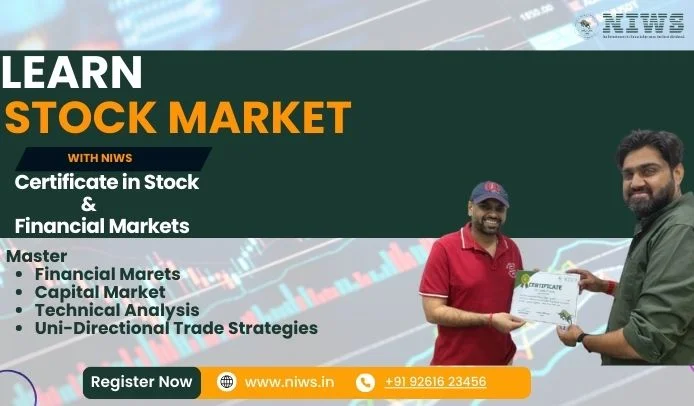
A "SEBI-registered stock market course" is not the same as SEBI registration. SEBI registration is a license. A person or firm holds it to carry out a specific regulated role, such as Research Analyst or Investment Adviser. A course certificate is different. It only shows that a student finished a training program. It carries no regulatory value on its own, unless it links to a recognized exam like NISM or NCFM. Search for "SEBI registered stock market course" online, and you will see the phrase used in many ways. Sometimes it means the trainer holds a regulated role. Sometimes it just means the course prepares students for an NISM exam.
Is There a SEBI-Registered Stock Market Course in India?
People search for this phrase often, and marketers use it a lot. But it needs a closer look. SEBI is India’s securities market regulator. It registers specific entities and professionals, such as Investment Advisers and Research Analysts. A regular trading course does not become "SEBI registered" just because it teaches market concepts or preps students for an exam.
If an institute says "SEBI registered," ask one question: who or what is registered, under which category, and what is the registration number? That single question clears up most confusion. For background, read NIWS’s guide on who regulates the stock market in India before you compare course credentials.
SEBI keeps public, searchable records for Research Analysts and Investment Advisers so you can check any claim directly.
What Is the Difference Between SEBI Registration and NISM Certification?
Registration means SEBI has approved a person or entity for a regulated activity. This comes with eligibility rules and ongoing duties. For example, SEBI’s investor education material says Research Analysts must register if they give research reports or investment advice for a fee. They must also follow the Research Analyst regulations.

NISM stands for the National Institute of Securities Markets. SEBI set it up in 2006. NISM runs exams for many securities-market roles. One example is the NISM-Series-XV Research Analyst exam. It sets the knowledge standard for research analysts and related roles covered by the regulations.
|
Term |
What it means in India |
What it does not mean |
|
SEBI registration |
Regulatory registration for specified categories such as Investment Advisers or Research Analysts, subject to the applicable rules |
It is not a blanket approval of every course taught by a person or institute |
|
NISM certification |
A certification examination conducted by the National Institute of Securities Markets. Several NISM exams are mandated by SEBI for specified market roles |
It does not mean the holder or training institute is automatically a SEBI-registered adviser or analyst |
|
NSE/NCFM certification |
Certification modules and examinations associated with NSE learning pathways |
It is separate from SEBI registration |
|
Institute certificate |
A certificate issued by a private institute after completing its own program |
It is not a regulatory licence and does not allow regulated activity by itself |
NISM, the National Institute of Securities Markets, was set up by SEBI. It runs certification exams for different securities-market roles. Several of these exams are compulsory for specific roles under SEBI’s rules. Each exam has its own syllabus, pass mark, validity period, and fee.
This is different from finishing a private training course. An institute can prepare you for a NISM exam. It may teach the syllabus and run mock tests. But the actual NISM certificate comes only from the NISM exam process, not from the coaching institute.
If you're comparing beginner programs, NIWS's stock market courses for beginners guide can show you how certification preparation fits into broader market training. We cover this topic in more depth in our NISM Certification guide in India.
How Can Beginners Verify a SEBI or NISM Claim Before Enrolling?
-
Ask for the exact wording of the claim. Is the person SEBI registered? NISM certified? NSE certified? Or are they simply teaching a course that covers these topics?
-
If someone claims SEBI registration, ask for the category and registration number.
-
Check the official SEBI intermediary records for the relevant category.
-
For NISM, ask for the exact exam name or series number. Do not accept a vague "NISM certified" label.
-
Check whether the course fee covers training only, or the external exam fee too.
-
Check whether your certificate is an institute completion certificate or an external credential.
-
Be careful when a course mixes several terms into one phrase, like "SEBI-NISM approved course," without explaining what it means.
Check out our guides about technical analysis, fundamental analysis, and the importance of stop loss.

How NIWS Presents Certification Clearly to Indian Learners
For NIWS, the clearest approach is simple: keep three messages separate on course pages and in counselling. What does the NIWS program teach? What NIWS certificate do you get after finishing? And which external exam does the course prepare you for? If a trainer holds a personal registration or certification, state that separately with the exact credential.
For students, that’s the right way to judge a program. Look at the learning content, then check which credential comes from which body. For a wider view of where this path can lead, see our post on alternate career pathways in the stock market.
|
Before enrolling |
Conclusion
For beginners in India, here is the safest way to read certification claims: separate regulation, examination, and education. SEBI registration covers defined regulated activities and categories. NISM runs certification exams, and several are compulsory for specific roles. A private institute can issue its own course certificate and can prepare you for external exams. Before you pay a fee, ask which of these three you are actually getting.
CTA: Explore NIWS programs and check which certification path matches your trading goals
Frequently Asked Questions
Q. 1 Is a SEBI-certified course compulsory to start trading in India?
Ans: If you trade or invest your own money, you do not need a generic "SEBI-certified course" to start. You do need to understand the market, how to set up your account, the risks involved, and the products you use.
Q. 2 Is NISM certification useful for stock market careers in India?
Ans: Yes, depending on the role. SEBI makes several NISM exams compulsory for specific market roles. Other NISM certifications can also help with knowledge and job prospects. Choose your exam based on the role you want.
Q. 3 How can I check whether a Research Analyst is SEBI registered in India?
Ans: Use SEBI’s official intermediary search for Research Analysts. Check the name and registration number yourself. Do not rely only on screenshots or marketing material.
Q. 4 Is an institute certificate the same as NISM certification?
Ans: No. An institute certificate only shows you finished that institute’s program. NISM certification comes only from passing the relevant NISM exam.
Q. 5 What does "SEBI registered institute" mean?
Ans: Treat this phrase carefully. Ask which regulated category it refers to, and whose registration it is. A training institute is not automatically approved by SEBI just because it teaches the stock market.
By Umesh Sharma
MBA with 22 years of experience in Banking and Financial markets with expertise in marketing, administration, sales and training. He is working as Director, of marketing operations and wealth management in NIWS. He always innovates new ideas with a positive attitude and long-term vision, making him a key asset to the team NIWS. He is of firm belief that one can achieve goals by ethics, integrity and passion.